

Tel: +86-0755-29898410
+86-0755-29898460
Email: fiona@xaori.net
Add: Kunhong Building, No. 38, Xinhe Avenue, Xinqiao Community, Shajing Street, Baoan District, Shenzhen, Guangdong, China
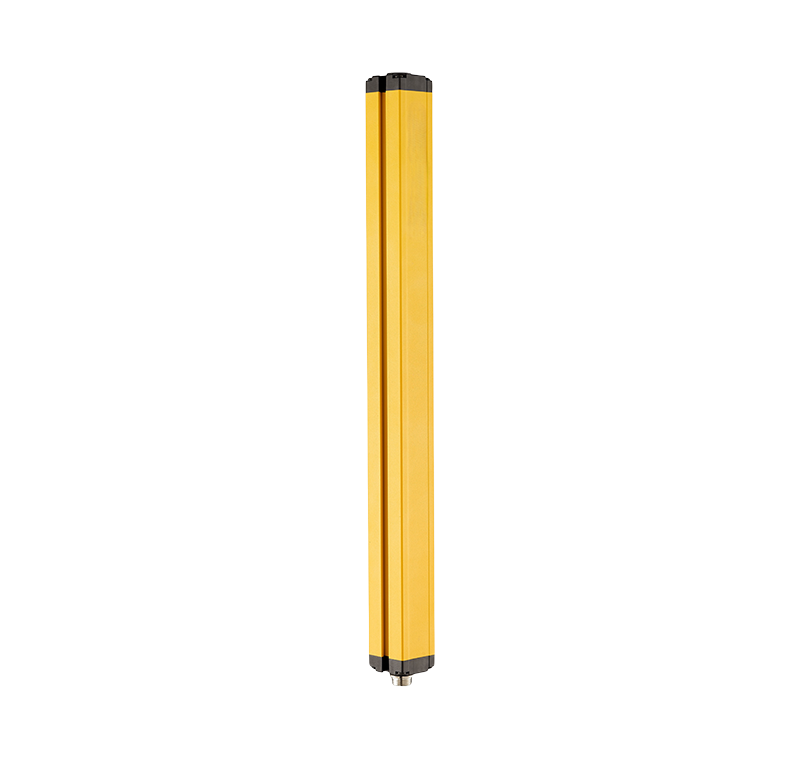
Industrial grating sensors face relentless mechanical stress in hydraulic presses, rolling mills, and heavy material handling systems where pressure spikes routinely exceed 50 MPa. Traditional aluminum enclosures deform under such loads, causing optical misalignment and catastrophic failure. Modern solutions leverage forged 17-4PH stainless steel housings with tapered load-transfer designs that distribute forces away from sensitive emitter-receiver arrays. Case studies from automotive stamping plants reveal these redesigned units withstand 180% greater peak pressures than standard enclosures while maintaining sub-millimeter optical alignment – even after 20-ton blank impacts.
Optimized grating sensor protection requires multi-layered engineering:
Impact-Resistant Optical Windows: Laser-fused sapphire composites replace traditional glass, achieving 9 Mohs scratch resistance while transmitting 98% of 880-950nm wavelengths essential for infrared grating operation
Elastomeric Dampening Systems: Viscoelastic polymer matrices surrounding sensor PCBs absorb 87% of shock energy before reaching critical components
Metallurgical Innovation: Precipitation-hardened aluminum bronzes (C95400) provide corrosion resistance comparable to stainless steel at 40% reduced weight for moving machinery applications
These material advancements enable uninterrupted operation in environments like forging presses where 130dB impact noise and 5G vibrations destroy conventional sensors within weeks.
Rigorous pressure protection demands reimagined installation principles:
Flush-Mounted Pressure Plates: Distribute point loads across entire sensor surfaces
Angled Deflection Wings: Redirect debris impacts away from critical zones
Preloaded Frame Structures: Maintain optical alignment through elastic deformation
Verified through FEA simulations, these designs reduce internal stress concentrations by 72% during 80-ton press closure cycles. The strategic addition of sacrificial wear strips on approach paths preserves main sensor integrity – a cost-saving measure proven in steel coil processing facilities.
Protecting grating sensors in hostile environments requires active countermeasures:
Pulsed Air Curtains: Create particle deflection fields around optical windows
Thermal Buffering: Phase-change materials absorb heat during hot forging operations
Magnetic Field Containment: Mu-metal shields prevent electromagnetic interference from nearby spot welders
Modern pressure protection extends beyond physical safeguards:
Distributed Redundancy: Triple-beam validation protocols where three separate beams must simultaneously trigger before declaring an intrusion
Real-Time Load Monitoring: Strain gauge arrays embedded in mounting structures predict pressure buildup milliseconds before peak impact
Self-Healing Circuits: Conductive polymer traces automatically reconnect after transient overloads
Rolling mill implementations demonstrate how this integrated approach reduces safety system downtime by 92% compared to conventional designs.
Pressure-hardened grating sensors must exceed baseline certifications:
ISO 13849 PL e for safety integrity
MIL-STD-810H mechanical shock validation
IP69K/IP6X particulate and pressure wash immunity
EN 13000 Annex B structural load testing
Verification employs hydraulic rams applying progressively increasing forces while laser interferometers measure optical path stability – ensuring sub-5μm deflection at 3X rated capacity.
Heat-shielded sensors withstand 800°C molten aluminum splashes
Boron nitride-coated optical windows resist metal adhesion
Pressure wave dampeners absorb 2ms compression shocks from hydraulic intensifiers
360° containment shrouds prevent pulp infiltration
Steam-resistant electronics withstand 100% humidity environments
Differential pressure balancing maintains calibration despite roll deflection
Magnetic mounting enables rapid tooling change adaptation
Automatic beam recalibration after 500kN impacts
Vibration pattern recognition detects ram misalignment
Tomorrow’s pressure-protected grating sensors embed:
Piezoelectric Health Monitoring: Detects micro-fractures in protective elements
Thermographic Lifecycle Prediction: Quantifies material fatigue through infrared signatures
Digital Twin Synchronization: Simulates protection performance before physical deployment
Self-Reinforcing Materials: Shape-memory alloys hardening upon impact detection
Quantum Pressure Sensing: Electron tunneling measurement of enclosure strain
Energy Harvesting Designs: Converting mechanical stress into operational power
Conclusion: True pressure protection for grating sensors demands holistic engineering that transcends conventional enclosure design. By synergizing advanced metallurgy, intelligent mounting architecture, and predictive resilience systems, manufacturers achieve unprecedented reliability in the world's most demanding industrial environments. These innovations transform grating sensors from vulnerable components into ruggedized systems capable of surviving where traditional safety systems fail – ensuring continuous protection without production interruption.




 WhatsApp
 Phone
Phone E-mail
 Message